Marilyn at 100
Norma Jeane Mortenson would have turned one hundred this year. Over two weeks in Hampstead, we bring together the gallery's full Marilyn collection — photography, silkscreens and Pop iconography from the artists who saw her best.
Opening Day
Saturday 30 May · 2 – 4 pm
Espresso by Fatboy Slim's Peppito Coffee & cake.
Sunday Reception
Sunday 31 May · 2 – 5 pm
A glass of Sipsmith Gin with Gabrielle & the team.
Exhibition
30 May – 14 June 2026
At the gallery, 1 Perrins Court, Hampstead NW3.
One hundred years of Norma Jeane.
Born Norma Jeane Mortenson on 1 June 1926 in Los Angeles, Marilyn's beginnings were anything but the gilded story the world would later attach to her. She grew up between foster homes and an orphanage. By sixteen she had married a neighbour to avoid being returned to the system. A factory floor and a wartime photographer's lens, almost by accident, are what changed her life.
By the early 1950s she was Marilyn Monroe — the platinum hair, the breath, the small mole — and Hollywood had a star it didn't quite know what to do with. She made Gentlemen Prefer Blondes, How to Marry a Millionaire, The Seven Year Itch, Bus Stop, Some Like It Hot, The Misfits. She founded her own production company — extraordinarily bold for a woman in 1950s Hollywood — and studied with Lee Strasberg at the Actors Studio when the industry was telling her she was a face, not an actress.
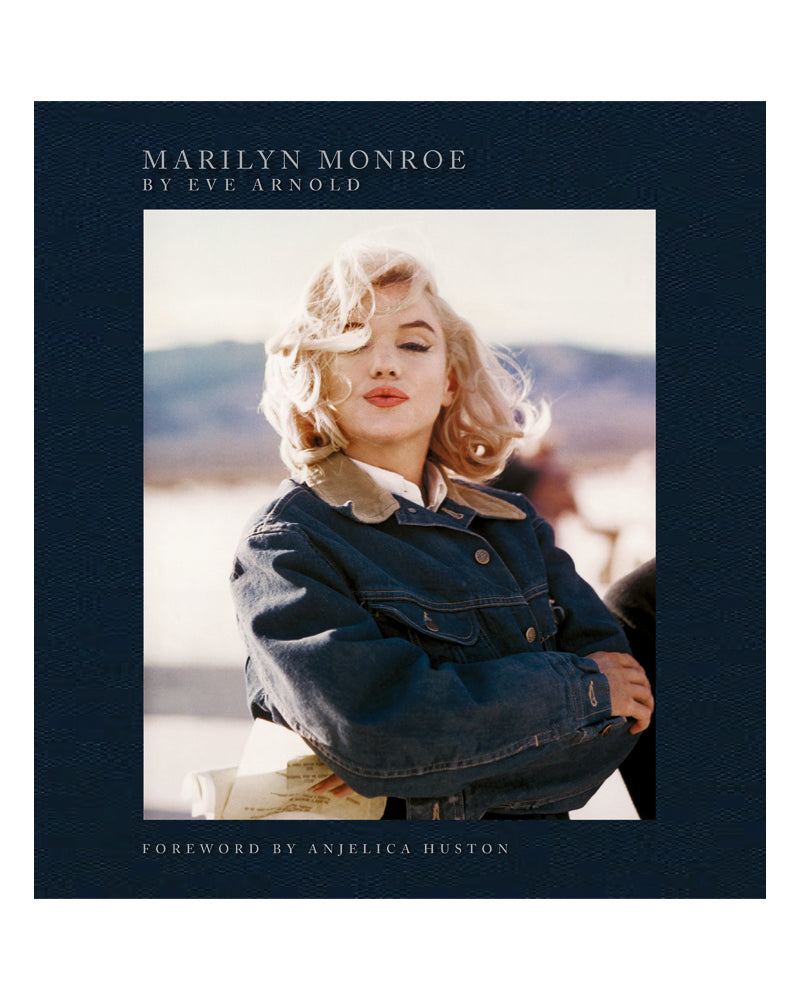
She was also, almost always, photographed. By Eve Arnold on the dunes of Long Island in 1955, reading Ulysses. By Milton H. Greene in white robes at the Schenck mansion. By Douglas Kirkland the night she wore nothing but a white silk sheet for Look magazine. By Bert Stern, days before her death, in what became known as The Last Sitting. The photographers loved her because she was generous to the camera in a way few of her peers were — playful, melancholy, intelligent, completely awake.
August 1962.
On 4 August 1962, at thirty-six years old, Marilyn Monroe was found dead at her home in Brentwood. The coroner ruled it a probable suicide by barbiturate overdose. The decades since have brought theories and counter-theories, biographies and films, but the simpler, sadder truth is that she had been unwell for a long time, and the industry that had built her image had given her precious little to lean on.
What she left was an iconography. Andy Warhol's Marilyn silkscreens, made the month after her death, transformed her into the defining visual subject of Pop Art. Sixty years on, her image is one of the most reproduced — and most argued over — in the history of photography and printmaking.
"I am not interested in money. I just want to be wonderful."
The Photographers
Arnold, Greene, Kirkland, Stern. The images that made her unforgettable.
The Printmakers
Sunday B. Morning's Belgian silkscreens; David Studwell's Diamond Dust series.
The Legacy
A century on, the most reproduced face in the history of the camera and the silkscreen.
47 works, one woman.
Every Marilyn Monroe work at Zebra One Gallery, gathered in one place for the centenary. Click any piece to see edition details and price.
Eve Arnold
Milton H. Greene
Douglas Kirkland
Sunday B. Morning
David Studwell
Steve Kaufman
Pure Evil
Andy Warhol
Invader
Come and see her at the gallery.
The exhibition runs 30 May – 14 June 2026 at 1 Perrins Court, Hampstead. Saturday opening 2 – 4 pm with Peppito Coffee & cake. Sunday 2 – 5 pm with Sipsmith Gin. No booking required for the weekend events.